Prepared by:
Robert D. Lantz, Esq., Founder and Owner of Lantz Law Group
At Lantz Law Group, we believe informed clients make better decisions. Whether you’re considering filing a lawsuit or have been served with a complaint, understanding the litigation process can help you navigate what may feel like an overwhelming journey with confidence and clarity.
Litigation is the formal process of resolving disputes in the court system. While every case is unique, most civil lawsuits follow a predictable path from initial consultation to final resolution. This guide provides an overview of that journey, breaking down the eleven stages of litigation into clear steps.
What to Expect: The Reality of Litigation
Before diving into the workflow, it is important to set realistic expectations. Litigation is rarely quick or inexpensive. A typical civil case can take one to five years to resolve, and legal fees can range from tens of thousands to hundreds of thousands of dollars, depending on the case’s complexity.
The timeline in this guide shows estimated durations for each stage, but these are approximations. Court schedules, opposing counsel’s actions, and the complexity of your case will all affect the actual timeline. Some cases settle early through negotiation, while others proceed all the way to trial and appeal.
It is also crucial to consider whether litigation is the right choice for your situation. If the amount in dispute is under $100,000, the financial and emotional costs of pursuing or defending a lawsuit may outweigh the potential recovery. During your initial consultation, your lawyer should assess your case’s strengths, weaknesses, and possible outcomes to help you make an informed decision. In plaintiff representation, there will be significant time and resources devoted to ensuring that the litigation, if pursued, will withstand initial scrutiny from the Court and succeed against any attacks from the responding party.
Understanding the Eleven Stages
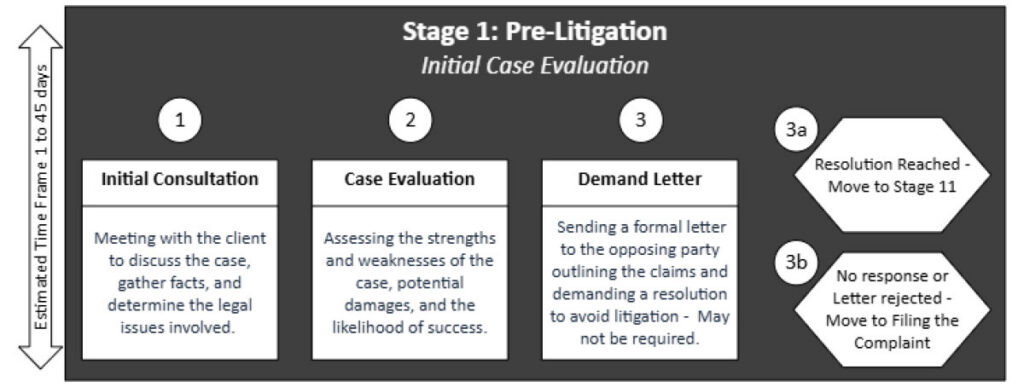
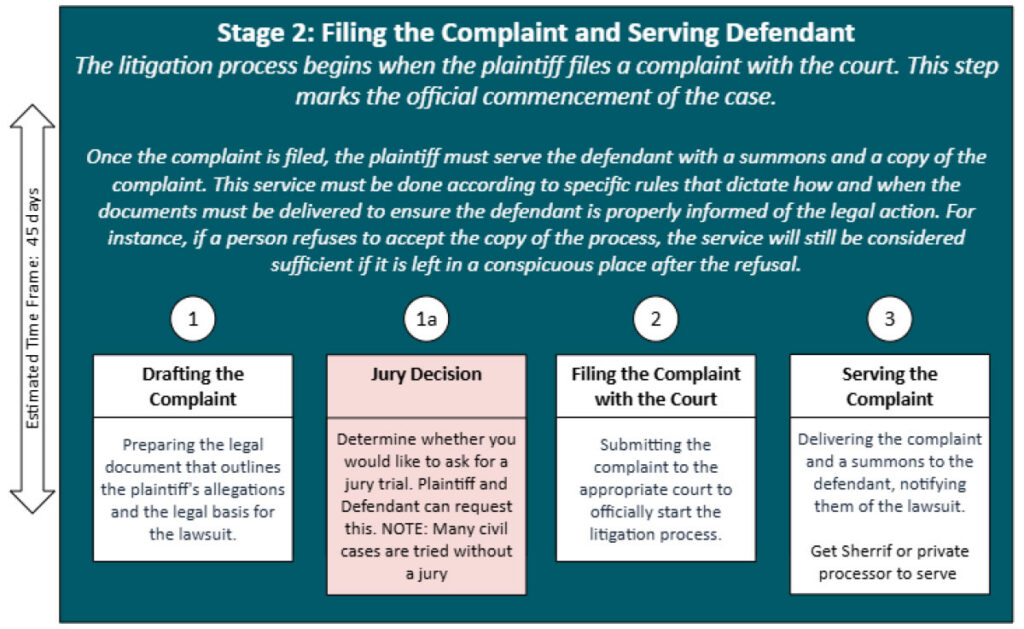
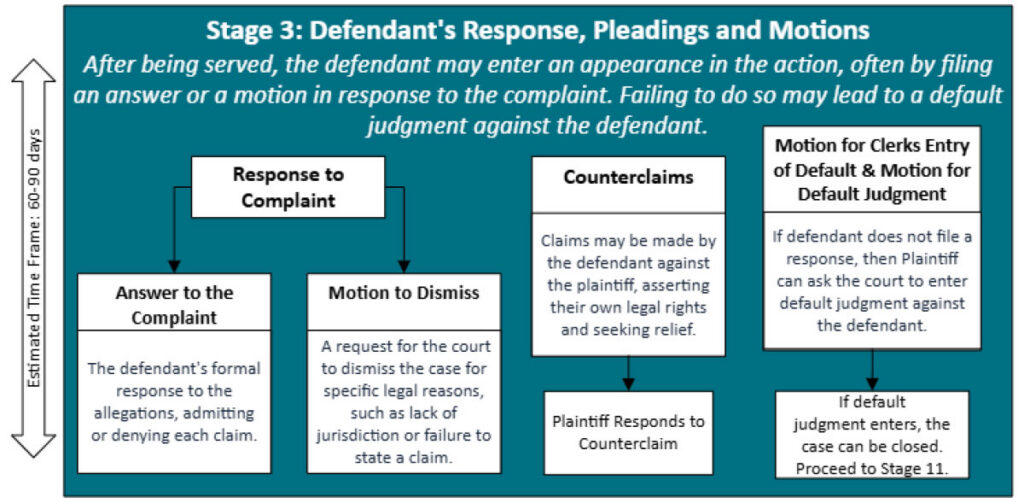
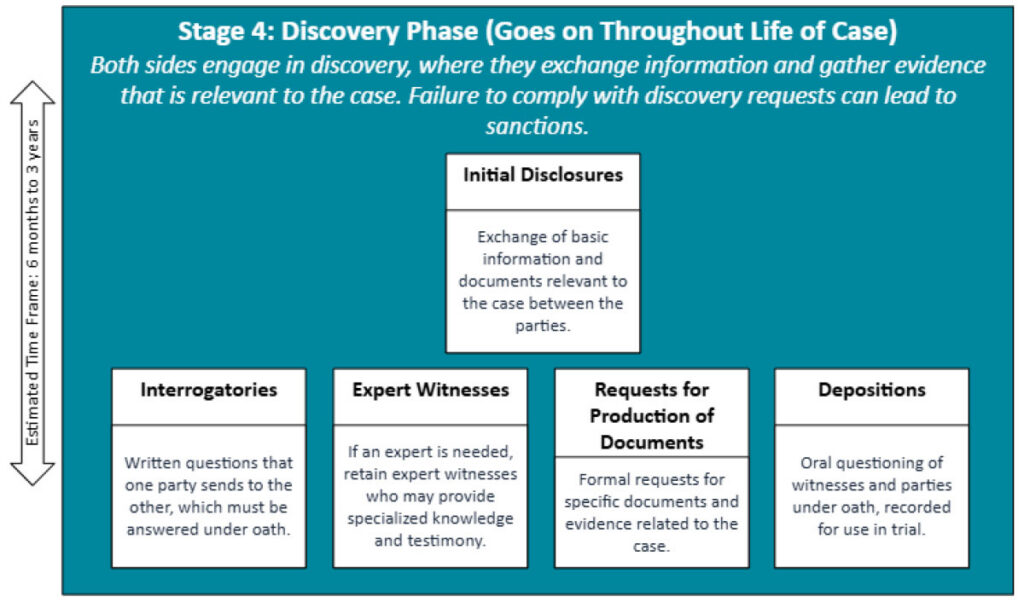
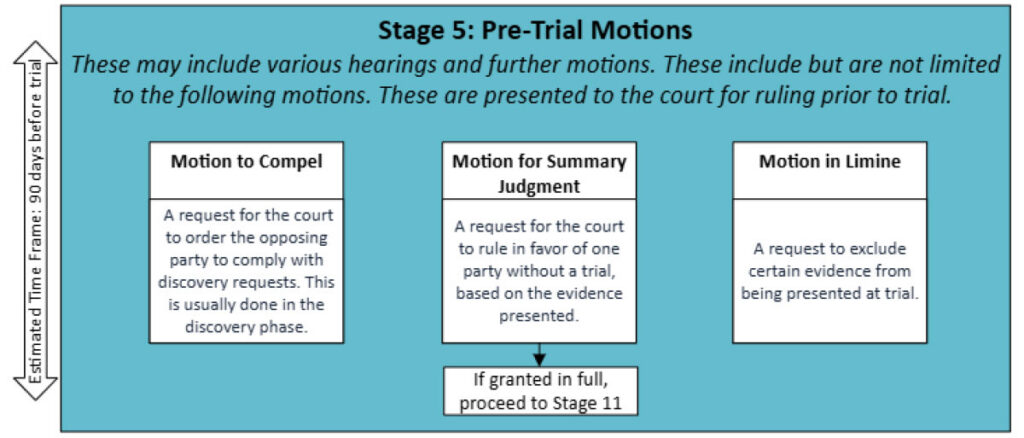
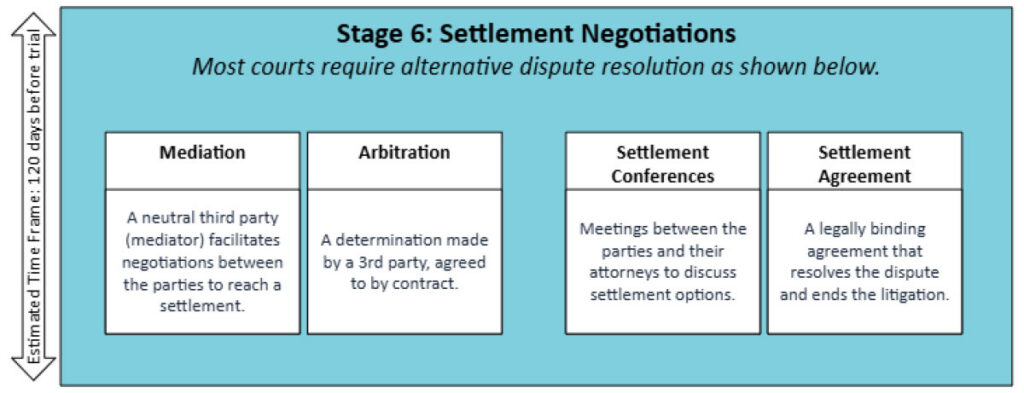
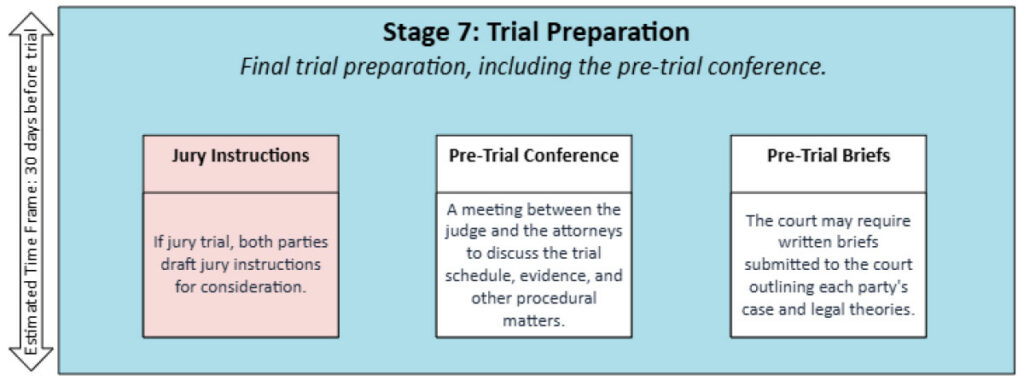
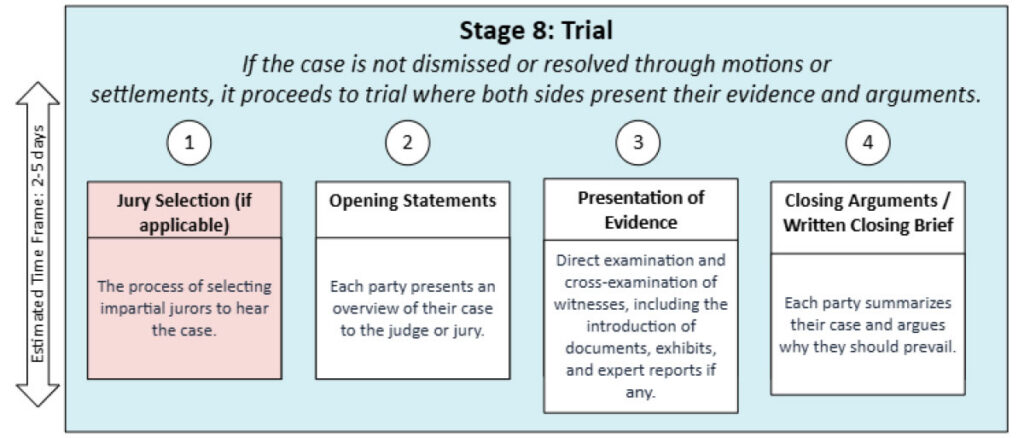
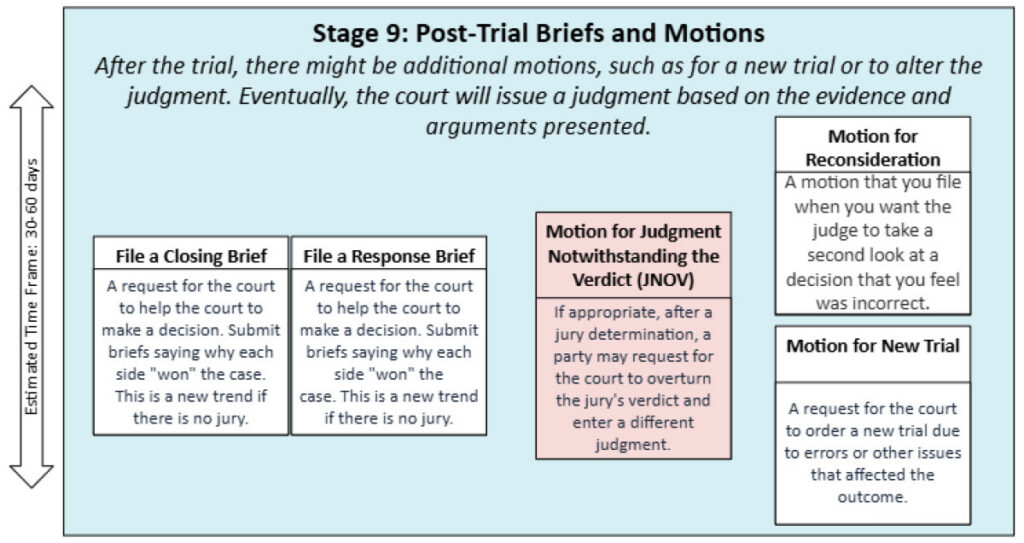
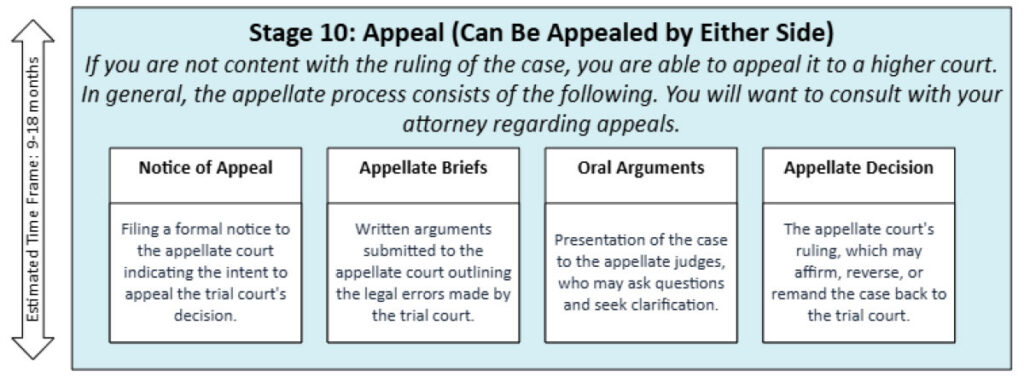
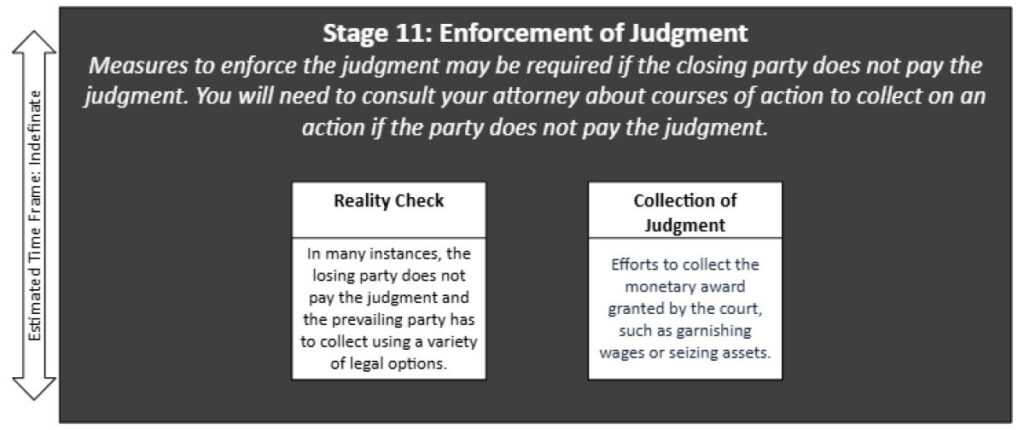
The accompanying workflow chart outlines the eleven stages of litigation, from pre-litigation evaluation through enforcement of judgment. Here is what you will find:
- Stage 1: Pre-Litigation – Initial case evaluation and demand letter
- Stage 2: Filing the Complaint and Serving Defendant – Officially commencing the lawsuit
- Stage 3: Defendant’s Response, Pleadings and Motions – The defendant’s initial response
- Stage 4: Discovery Phase – Exchange of information and evidence
- Stage 5: Pre-Trial Motions – Legal arguments before trial
- Stage 6: Settlement Negotiations – Attempts to resolve the case without trial
- Stage 7: Trial Preparation – Final preparation if settlement is not reached
- Stage 8: Trial – Presentation of evidence and arguments to judge or jury
- Stage 9: Post-Trial Briefs and Motions – Final legal arguments after trial
- Stage 10: Appeal – Challenging the trial court’s decision in a higher court
- Stage 11: Enforcement of Judgment – Collecting the judgment if you prevail
Each stage serves a specific purpose and has its own procedures, deadlines, and strategic considerations. The chart provides detailed information about what happens at each stage, and approximately how long each phase takes.
Alternative Dispute Resolution
Not every case will go through all eleven stages. In fact, most cases settle before trial. Throughout the litigation process, there are multiple opportunities for alternative dispute resolution, such as:
- Mediation: A neutral third party helps facilitate negotiations between you and the opposing party to reach a mutually acceptable settlement.
- Arbitration: A private decision-maker (arbitrator) hears evidence from both sides and makes a binding determination, typically faster and less formal than a court trial.
- Settlement Conferences: Direct negotiations between the parties and their attorneys to explore resolution options.
Many courts now require parties to engage in some form of alternative dispute resolution before proceeding to trial. These processes can save significant time and money while still achieving a favorable outcome.
Your Role in the Process
While your attorney handles the legal strategy and court procedures, your involvement is crucial to your case’s success. You can expect to:
- Provide complete and honest information about the facts of your case
- Gather and organize relevant documents and evidence
- Be available for meetings, depositions, and court appearances
- Respond promptly to your attorney’s requests for information
- Make informed decisions about settlement offers and case strategy
- Maintain realistic expectations about timelines and outcomes
Open communication with your legal team is essential. Do not hesitate to ask questions or express concerns throughout the process. We are here to guide you every step of the way.
The Importance of Early Legal Counsel
Whether you are considering filing a lawsuit or have just been served with a complaint, consulting with an attorney early in the process is critical. Early legal advice can:
- Help you understand your rights and options
- Preserve important evidence and witness testimony
- Ensure you meet critical deadlines (such as statutes of limitations)
- Identify potential defenses or counterclaims
- Evaluate the true value and viability of your case
- Potentially resolve disputes before formal litigation becomes necessary
Many disputes can be resolved through negotiation or alternative methods before a lawsuit is filed, saving you time, money, and stress. Even when litigation is necessary, early preparation strengthens your position throughout the process.
LEGAL DISCLAIMER
The information contained in this document and the accompanying General Litigation Workflow chart is provided for informational and educational purposes only and does not constitute legal advice. Every legal situation is unique, and the information presented here is a general overview that may not apply to your specific circumstances.
This document is not intended to create, and your receipt or review of it does not constitute, an attorney-client relationship between you and Lantz Law Group. An attorney-client relationship is only established through a formal engagement agreement signed by both parties.
The litigation process varies significantly depending on the type of case, jurisdiction, court rules, and specific facts involved. Timelines, procedures, and outcomes described in this guide are approximations and should not be relied upon as predictions for any particular case. Actual litigation may be shorter or longer, more or less expensive, and may involve additional steps not described in this general overview.
You should not take any action or refrain from taking any action based on the information in this document without first consulting with a qualified attorney who can provide advice tailored to your individual situation. The law is constantly evolving, and court rules and procedures may change. Failure to seek appropriate legal counsel for your specific circumstances could result in the loss of your legal rights.
Reliance on any information contained in this document or the accompanying workflow chart is strictly at your own risk. Lantz Law Group makes no representations or warranties regarding the accuracy, completeness, or timeliness of the information provided.
If you need legal advice or representation, please contact Lantz Law Group directly to schedule a consultation. Only through a formal attorney-client relationship can we provide legal advice specific to your situation and represent your interests.
By reviewing this content, you acknowledge that you understand there is no attorney-client relationship created between you and Lantz Law Group, and that you will not rely on this information as legal advice without consulting with an attorney.